
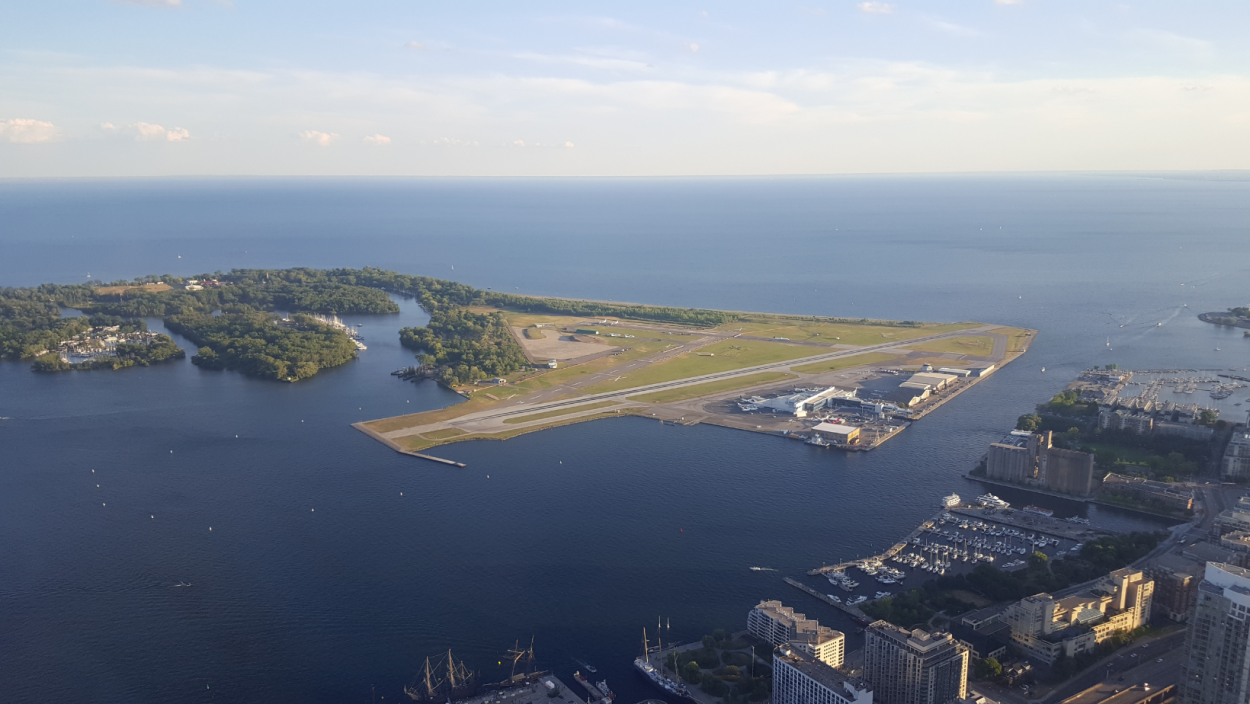

Few airports anywhere in North America sit as close to a major city's downtown core as Billy Bishop Toronto City Airport. And few have generated as much sustained political conflict. The billy bishop airport controversy has simmered for decades, but it reached a new boiling point in 2026 when Ontario Premier Doug Ford moved to seize city land and fast-track a massive expansion through provincial legislation. Here's what you need to know about the dispute, who stands where, and what's at stake for Toronto's waterfront.
What is Going on with Billy Bishop in Toronto?
The Billy Bishop Toronto City Airport controversy involves economic and environmental concerns that cut across all three levels of Canadian government. Tensions have been building since the airport's inception in the late 1930s, but the 2026 provincial takeover attempt has escalated the conflict to an unprecedented level.
- Decades-old conflict, new flashpoint: Disputes over the island airport date back to at least the 1983 tripartite agreement, which imposed noise limits, curfews, and a ban on passenger jets. The 2013 jet proposal, rejected by city council, set the template for today's fight.
- Ford government's 2026 power play: The Building Billy Bishop Airport Act, passed June 2, 2026, enables Ontario to expropriate city land at the airport and designate the area a special economic zone, bypassing municipal planning controls.
- City and community opposition: Toronto Mayor Olivia Chow, a majority of city council, community groups like NoJetsTO, and local councillors oppose the expansion plans, calling it a "land grab" that threatens democratic control over the city's waterfront.
- Federal role and Indigenous concerns: Transport Canada launched public consultations in June 2026, and Indigenous peoples have raised concerns about land stewardship and the adequacy of the consultation process.
- Taxpayer exposure and environmental risk: The proposed expansion could cost up to CA$5 billion over 25 years. Officials promise airport users will pay, but critics question whether public subsidies can truly be avoided at that scale. Environmental protections, noise, and air pollution remain central fault lines.
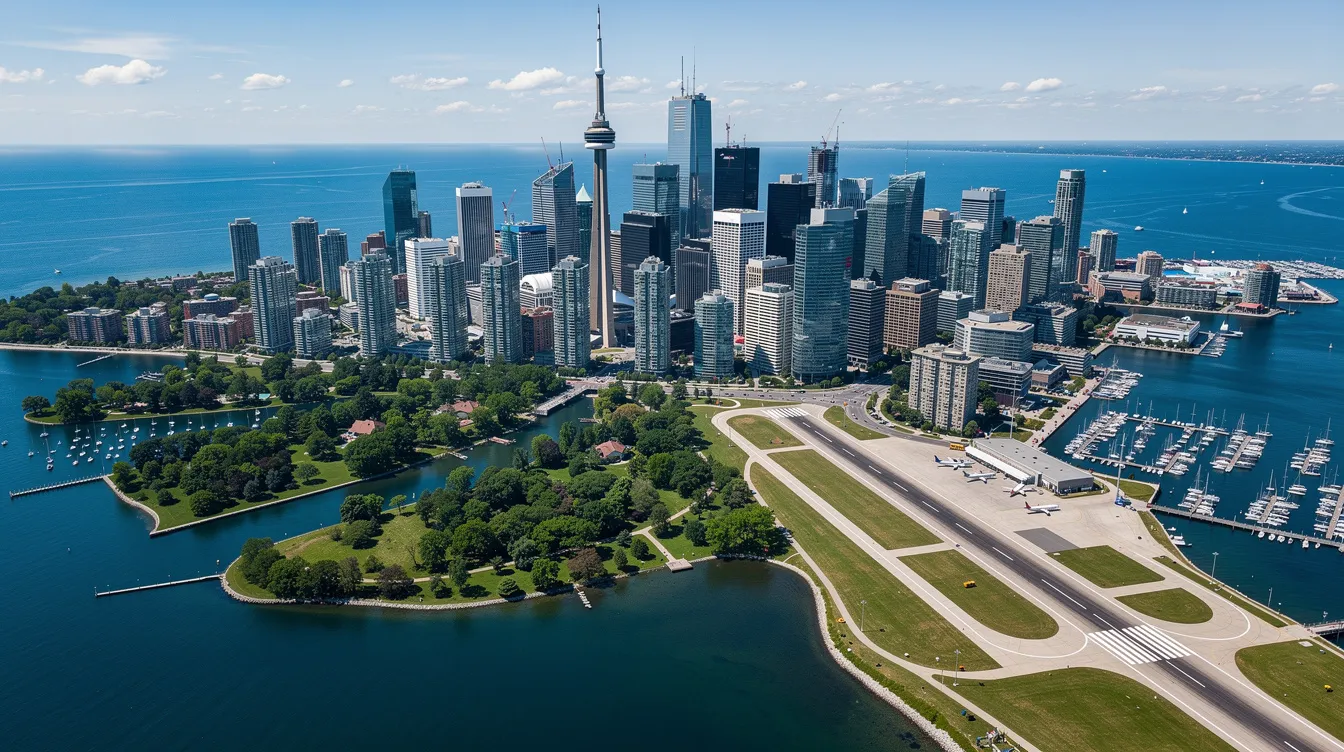
Overview of Billy Bishop Toronto City Airport (Island Airport)
Billy Bishop Toronto City Airport (IATA: YTZ), commonly known as the island airport or the Toronto Island Airport, sits on the western tip of the Toronto Islands, just a short ferry ride and pedestrian tunnel crossing from the city's central waterfront. It is one of the few downtown-adjacent airports in North America, a distinction that fuels both fierce loyalty among frequent flyers and deep resentment among nearby residents.
- Ownership and governance: The airport lands are controlled under a three-way structure. PortsToronto (formerly the Toronto Harbour Commission, later the Toronto Port Authority) holds about 78% of the land. The city of Toronto owns roughly 20%, and transport canada controls approximately 2%. All operations are governed by the tripartite agreement signed in 1983 between these parties.
- Airline service: Porter Airlines dominates the schedule, operating turboprop and some jet routes to Canadian and U.S. destinations. Air Canada also offers competing service. The airport primarily handles short haul flights for business and leisure travellers, distinguishing it from Pearson Airport (YYZ) in Mississauga, which serves as the region's main international hub for long-haul and cargo traffic.
- Passenger volumes and economic impact: At its pre-COVID peak in 2019, about 2.774 million passengers used the airport. Supporters cite roughly $470 million in annual GDP contributions and nearly 4,740 jobs. By 2023, passenger volumes had climbed back above 2 million annually after pandemic-era declines.
- Why so controversial: The airport's proximity to dense residential neighbourhoods, high-rise condos along toronto's waterfront, and the recreational spaces of the Toronto Islands means that every operational decision-flights, noise, emissions, land use-is felt immediately by thousands of toronto residents. Overlapping municipal, provincial and municipal laws, and federal jurisdictions make governance uniquely complex.
Historical Roots of the Island Airport Controversy
Conflict over the island airport predates today's ford government fight by the better part of a century. The airport has served as a source of controversy since its inception in the late 1930s, when it opened in 1939 as Toronto City Centre Airport on what was then called the Western Gap of the Toronto Islands.
Through the 1960s and 1970s, major city planning decisions gradually shifted much of the Toronto Islands toward recreational use and parkland. The development of Malton Airport (later renamed Toronto Pearson) as the region's primary hub reduced but never eliminated pressure on the island airport. Community AIR formed in 2001 to oppose airport expansion, reflecting a tradition of grassroots resistance that has persisted for decades.
- The 1983 tripartite agreement was designed to balance competing interests: it permitted continued airport operations while imposing strict curfews, aircraft noise caps (using the NEF 25 contour threshold), and restrictions on future expansion, including a ban on jets and prohibition on fixed links such as bridges.
- Successive expansion proposals sparked waterfront-vs-airport tensions. A bridge proposal was debated and ultimately rejected by city council in the early 2000s. A pedestrian tunnel later replaced the ferry as a second access point, but even that sparked debate about whether improved access would encourage larger operations.
- Every later controversy-from bridge construction to jets and runway extensions-turns on whether and how to reinterpret or amend that 1983 document. The agreement's expiry date of 2033, with no automatic renewal, has added urgency to recent negotiations.

Tripartite Agreement, City of Toronto Role, and Governance Structure
The 1983 tripartite agreement is the legal backbone of Billy Bishop's operations. It is a binding framework between the city of Toronto, the federal government (through transport canada), and the port authority (now PortsToronto) that controls nearly every aspect of how the airport functions.
- Noise and movement limits: The agreement sets noise exposure caps using the NEF 25 contour model and imposes daily aircraft movement restrictions. Operations must stay within these limits, and all three parties must agree on major changes.
- Jet ban and curfew: The airport is governed by a tripartite agreement that restricts its expansion and jet service. No passenger jets are permitted (with narrow exceptions for medevac). No scheduled flights are allowed after 23:00, and the control tower closes around that time.
- City's traditional role: Toronto is the landowner of critical waterfront parcels, has land use and zoning authority over the surrounding area, and serves as the political voice for downtown residents and waterfront users. This gave the city effective veto power over major expansion moves-until the 2026 provincial intervention.
- Disputes over interpretation: Whether a fixed link bridge was permitted, whether runway extensions violated the spirit of the agreement, and what constitutes an "amendment" have all produced repeated legal and political battles.
- PortsToronto's position: As a federal agency operating at arm's length from transport canada, PortsToronto manages day-to-day airport operations but must navigate both city and federal policy. This creates inherent tension when local and national priorities diverge. Debates about "who is in charge" of billy bishop-city councillors vs. federal agencies vs. now the provincial government-are central to the 2020s controversy.
City of Toronto Taxes, PILTs, and Financial Disputes
Disputes over how much the toronto port authority (now PortsToronto) should pay the city of Toronto in lieu of property taxes have been a recurring flashpoint. These financial battles are tightly linked to broader arguments about whether the airport contributes fairly to the community it occupies.
- At one stage, the Toronto port authority owed roughly $37 million in unpaid Payments in Lieu of Taxes (PILTs). A 2009 federal panel recommended payments of about 80 cents per passenger, aligned with the rate paid at Pearson airport.
- The resulting settlement saw the TPA pay $6.4 million for 1999–2008 PILTs, while the city paid $11.4 million for land transfers. City council ratified the deal.
- In 2014, city council agreed to raise the per-passenger rate to approximately 94 cents, again matching Pearson. Outstanding PILTs were effectively resolved by 2015, ending one chapter of the financial dispute.
- Critics argued the airport chronically underpaid for its local impacts-noise, congestion, lost revenue from alternative waterfront uses, while supporters emphasized that airport-generated fees, not local property taxpayers, covered infrastructure and provided some city revenue.
- Later multi-billion-dollar expansion cost estimates (up to $5 billion over 25 years) revived these questions. Who ultimately pays-airport users, other levels of government, or Toronto taxpayers-remains unresolved.
Late Night Landings, Noise Curfews, and Community Complaints
Noise and late-night operations are among the most tangible ways area residents experience the airport, making violations of curfew particularly contentious. Opponents of the expansion argue about noise and pollution impacts on residents, and curfew enforcement is where those concerns become personal.
- The formal curfew prohibits scheduled takeoffs and landings after 23:00. The control tower closes at that time, similar to many smaller Canadian airports.
- In 2008, a Porter Airlines flight landed after curfew despite being advised to divert, which led to a fine and significant media scrutiny over enforcement. Regulations allow fines of up to $10,000 for commercial landings outside approved hours, but community groups have questioned how consistently penalties are imposed.
- Waterfront residents' associations have organized noise monitoring campaigns and put sustained pressure on city council and PortsToronto to tighten or better enforce airport noise rules.
- Opponents argue that additional slots, larger aircraft, and longer runways will intensify noise pollution even if "quieter" turboprops or next-generation jets are promised. The connection between curfew protections and expansion proposals is direct: more flights mean more pressure on the boundaries of acceptable operating hours.
Slot Increases, Airlines, and Growth of Airport Operations
Through the late 2000s and early 2010s, billy bishop saw rapid growth in flights and passengers, intensifying both economic arguments for the airport and community resistance.
- In 2009, the toronto port authority moved to invite additional carriers within the 1983 agreement's movement cap, planning to increase daily slots from around 120 up to a possible 162–212 once Porter's new terminal opened.
- Air Canada resumed service to the island airport around 2011 after legal challenges against the TPA were dismissed, while Continental Airlines withdrew, freeing more slots for porter airlines.
- Community protests and public health concerns in 2009–2010 triggered air quality and health impact studies. Local residents expressed fears about increased traffic from expanded operations at the airport, linking turboprop emissions to waterfront livability debates.
- By the mid-2010s, Billy Bishop handled more than 2 million passengers annually. But by around 2026, daily flights had dropped from 170+ to roughly 70, with Porter cutting some routes-such as its Sudbury service-amid changing market conditions and pandemic aftershocks.
- This growth-and-retrenchment arc is important context: it shows how capacity decisions feed directly into political controversy, and why claims about future passenger volumes are met with both enthusiasm and skepticism.
2013–2015 Jet and Runway Extension Debate
The proposal to allow jets and extend runways in the early 2010s was a pivotal controversy that still shapes public attitudes toward new expansion plans. Expansion proposals for Billy Bishop Airport include runway extensions to accommodate jets, and the 2013 fight made this prospect real for the first time.
- In 2013, porter airlines proposed amending the tripartite agreement to permit Bombardier CSeries (now Airbus A220) passenger jets from billy bishop, which would require extending the main runway into lake ontario on both ends.
- The city of Toronto responded with extensive staff reports, public consultations, and heated council debates weighing economic benefits-more destinations, jobs-against noise, safety, and waterfront impacts.
- Toronto Mayor Olivia Chow opposes jets due to noise concerns, a position she maintained consistently. City council ultimately declined to advance the jet proposal, and the federal government did not push to reopen the agreement, effectively blocking the plan.
- Waterfront advocates, including former mayor David Crombie and community group NoJetsTO, which opposes airport expansion plans, framed the fight as a choice between a people-oriented waterfront and an industrialized, airport-dominated shoreline.
- Many residents view current expansion plans as an attempt to revive the same basic idea-longer runways and larger jets-under different political leadership. The 2013 episode is the lens through which much of the current opposition views the Ford government's moves.
2020–Present: Facility Upgrades, Pre-clearance, and Renewed Expansion Plans
The 2020s brought significant facility investments alongside a renewed push for long-term expansion and a renegotiated operating agreement. The preclearance facility, airline lounge openings, and renewed Tripartite negotiations all set the stage for the Ford government's intervention.
- In June 2023, the federal government announced roughly CA$30 million for a U.S. border preclearance facility at billy bishop airport, designed to open by 2025 but ultimately coming into service on March 10, 2026. Airport users flying to U.S. destinations now clear customs in toronto before departure, paying a per-enplanement fee of CAD $22.50 in the first year.
- Air Canada, working with Aspire, opened the first full airport lounge at the toronto island airport in June 2023 in the domestic terminal, signaling a shift toward more premium business travel amenities.
- PortsToronto pitched a 40-year extension of the tripartite agreement, arguing the airport needed regulatory certainty for multi-billion-dollar investments in runway safety areas and terminal upgrades.
- In contrast, Toronto city council under mayor chow approved only a modest facility upgrade package and a much shorter 12-year extension, reflecting skepticism about locking in large-scale growth. The council also approved a minimal runway extension while rejecting PortsToronto's more ambitious proposals.
- By early 2026, the preclearance facility was operational and both Air Canada and Porter expanded transborder offerings, re-igniting debates over whether the island airport was slowly transforming into a de facto second international hub for toronto.
Ford Government Takeover and Special Economic Zone Designation
The most dramatic escalation in the billy bishop airport controversy came in 2026. The Building Billy Bishop Airport Act, passed by ontario on June 2, 2026, enables the provincial government to acquire city-owned lands at the airport-including parcels like Little Norway Park-and vest them in the Crown. Ontario Premier Doug Ford plans to take over the airport, and the legislation makes that intention law.
Ford's government will designate the airport a special economic zone, a mechanism that overrides or suspends certain municipal bylaws, zoning, and planning rules to fast-track airport expansion. This is a direct use of provincial authority over municipalities-a power rooted in Canada's constitutional framework but rarely exercised this aggressively against the country's largest city.
- Premier doug ford and Transportation Minister Prabmeet Sarkaria justified the move as necessary to unlock economic growth, generate jobs, boost tourism, and enhance access to toronto from northern and remote ontario communities. Government plans also reference internal polling showing 70% downtown support, though polls indicate a divided opinion among residents on the expansion proposals more broadly.
- The Act effectively sidelines city of Toronto authority over its own waterfront land. The province replaces toronto as one of the three parties in the tripartite agreement, severely weakening the city's leverage under the existing framework.
- The city of Toronto's role-the ability to block or shape major operational changes-was the core check on airport growth for four decades. By introducing legislation to strip that role, the ford government has triggered what critics call a unilateral action against municipal democracy.
- Reports suggest the federal government signalled at least cooperation with the takeover plan, placing the city in a two-against-one position. Prime minister Mark Carney's government has not publicly opposed the province's move, complicating the city's ability to resist.
Proposed Expansion Plans, Costs, and the "Taxpayers Won't Pay" Claim
The scale of envisioned expansion is enormous: runway safety area extensions, terminal redevelopment, additional gates, and supporting infrastructure that would turn bishop toronto city airport into a substantially more capable regional hub. The proposed expansion could cost up to CA$5 billion, and expansion plans may take 25 years to complete.
- The expansion is expected to take 25 years to complete, phased in stages. Runway enhancements will be the first phase of expansion, followed by larger terminal projects and supporting infrastructure.
- The funding model presented by airport and provincial officials relies on user-pay financing: airport improvement fees, gate charges, terminal concessions, and commercial revenues. Funding will come from fees paid by airport users. Taxpayers will not fund the airport expansion project, according to official assurances.
- Critics question whether a project of this magnitude can avoid public subsidies entirely. Concerns include indirect public risks-loan guarantees, foregone revenues, public infrastructure costs, environmental remediation, and compensation for expropriated city land. No full, transparent business plan has been published to support the claimed $8.5 billion economic impact or the target of growing passenger volumes from roughly 2 million to 10 million annually.
- Minister Sarkaria has stated the expansion would create thousands of construction jobs and spin-off employment. Opposition MPPs like Chris Glover have pressed the government in committee for proof, finding no business case publicly available. The absence of a published business plan is a serious gap given the project's scale.
- Cost and risk distribution-between airport users, city residents, and provincial and federal taxpayers-is central to the current controversy, not just a technical detail.
Environmental, Health, and Waterfront Redevelopment Concerns
Environmental and health impacts have been central to every major billy bishop debate, often uniting waterfront residents, environmental organizations, and urban planners in opposition. The planned expansion raises all of these concerns to a new level.
- Opponents cite environmental concerns related to potential water quality degradation. Runway extensions into lake ontario could affect aquatic ecosystems, shoreline dynamics, and publicly accessible waterfront spaces, intensifying conflict with long-standing visions of the central waterfront as a recreational and cultural corridor.
- Increased air pollution from higher aircraft and ferry traffic-nitrogen oxides, particulates-was documented in 2009–2010 studies commissioned in response to flight growth and community pressure. Critics argue that expansion will worsen air pollution near some of Toronto's densest residential areas.
- Community concerns include potential housing development impacts along the waterfront. Critics argue that expansion could hinder the development of residential units near the airport, limiting the city's ability to address its housing crisis along the city's waterfront.
- Noise and mental health concerns remain acute: residents in high-density waterfront condos worry that more frequent flights and potentially larger aircraft will erode quality of life despite existing curfews. The cumulative effect of noise, emissions, and construction over a 25-year buildout is a major source of anxiety.
- The tension between climate commitments and airport expansion is stark. Critics question whether doubling down on aviation infrastructure is compatible with Toronto's and Canada's greenhouse gas reduction targets. No formal comprehensive environmental assessment has been disclosed yet.
- The ford government's use of special economic zone tools can temporarily sidestep or compress environmental assessment processes, raising fears of weakened environmental protections despite government assurances.
Local, Indigenous, and Civil Society Opposition
Resistance to the proposed expansion and provincial takeover comes from a broad coalition. Toronto Mayor Olivia Chow opposes the airport expansion plan and has led city council in publicly condemning what she calls a power grab by the provincial government.
- Public protests occurred against the ontario government's airport takeover, with rallies on the waterfront and at Queen's Park drawing neighbourhood groups, waterfront advocates, and former city officials like David Crombie, who warn that the move undermines decades of waterfront revitalization.
- Local councillors oppose the airport expansion plans, and in April 2026, city council passed a motion opposing the takeover. The motion frames the province's actions as an undemocratic seizure of city land, with insufficient consultation and disclosure. Critics describe the legislation as an attempt to grab city land for purposes that benefit the province and airport operators at the expense of toronto residents.
- The federal government's parallel engagement process with indigenous peoples acknowledges unresolved issues around consultation, land stewardship, and impacts on lake ontario and traditional territories. Some First Nations and Indigenous organizations have voiced opposition or serious concern about both the expansion and the special economic zone model, pointing to a pattern of large projects advancing without robust consent.
- Civil society critiques place the project in a wider pattern: the ford government using extraordinary legislative tools to push urban megaprojects-like Ontario Place and the Ferris wheel project-over local objections, including those at Hanlan's Point and nearby waterfront areas.
- Some toronto business groups and frequent travellers do support expansion, arguing it will enhance connectivity and economic competitiveness. But the divide is deep, and polls indicate a divided opinion among residents on the expansion proposals.
Noise Mitigation, Safety Measures, and Airport Infrastructure Investments
Alongside expansion proposals, billy bishop has invested in several infrastructure projects meant to reduce impacts and improve safety. Both supporters and critics reference these measures when making their case.
- In 2017, PortsToronto opened a CA$9 million Ground Run-Up Enclosure (GRUE), a 14-metre-high structure roughly 63 by 66 metres on the south side of the airfield that contains engine testing noise during maintenance.
- Other noise and safety initiatives include strict curfews, limits on aircraft types (primarily turboprops), and investments in navigation aids and runway safety areas intended to meet evolving transport canada standards.
- Modern aircraft technology has improved noise and pollution concerns compared to older models, and proponents argue that next-generation turboprops and jets will further reduce per-flight impacts. However, opponents maintain that more flights will offset any per-aircraft improvements.
- On-site emergency and rescue capabilities include fire and rescue services, plus coordination with Toronto Police Marine Unit and Toronto Fire Services boats for water-based incidents-used by proponents to argue the airport is well equipped to handle emergencies.
- PortsToronto frames these measures as evidence of "responsible growth." Critics respond that mitigation technology does not offset the cumulative impact of dramatically more flights and allowing jets, especially over a 25-year expansion timeline.
City–Province–Federal Dynamics and the Role of Federal Agencies
Billy bishop sits at the intersection of three levels of government plus arm's-length federal agencies, creating a political landscape that is uniquely complex for any Canadian infrastructure project.
- The toronto harbour commission (later Toronto Port Authority, now PortsToronto) was created as a federal entity to manage port and airport lands. As a federal agency, it operates independently from transport canada but is guided by federal policy and regulations covering airport operations, safety, and environmental standards.
- Transport Canada's ongoing regulatory role includes the 2020s public engagement process on billy bishop's future, which sought to provide feedback from Canadians on noise, environmental measures, community infrastructure, and social benefits. Public consultations regarding the airport's future were initiated by Transport Canada in June 2026, including surveys, engagement with Indigenous communities, and expert input.
- The awkward alignment in 2026 placed the city of Toronto in a two-against-one position: the ontario government's provincial takeover push reportedly received at least tacit support from Ottawa, with the prime minister's office declining to publicly oppose the province's legislation.
- A broader constitutional question looms: provinces control municipalities under Canadian law, but airports and aviation fall primarily under federal jurisdiction. The legal territory is unclear when a province attempts to reshape governance around a federally regulated airport on city land. Court challenges over the Building Billy Bishop Airport Act, federal vs. provincial powers, and appropriate compensation are widely expected.
- The feedback received from public engagement will be important, but whether it substantively shapes outcomes-or is treated as a procedural formality-remains to be seen.
Economic Impact Arguments: Jobs, Tourism, and Regional Connectivity
Pro-expansion arguments pitch billy bishop toronto city airport as a key economic asset for toronto, ontario, and Canada's broader trade and tourism strategy. The ontario government projects that expanding the airport could contribute significantly to the economy, with claims of up to $8.5 billion in economic impact.
- The ford government and PortsToronto argue that expansion will generate thousands of construction jobs and sustained employment in airport operations, hospitality, and related sectors in downtown toronto. Expansion proponents argue it is necessary for future growth and competitiveness of the airport.
- Some northern ontario leaders argue that enhanced service from billy bishop could better link remote communities and smaller cities to the provincial capital, improving access to specialized healthcare, education, and markets-a point the government emphasizes as a social benefits argument.
- Supporters of the expansion claim it will enhance connectivity for business and tourism, positioning toronto among world class cities with convenient downtown airport access. The new preclearance facility deepens this value proposition for U.S.-bound travellers.
- Critics caution against overestimation: potential displacement of other waterfront economic uses (parks, culture, housing), vulnerability of aviation-dependent plans in a carbon-constrained future, and the risk that projected jet traffic volumes may not materialize. The status quo, they argue, already delivers significant economic value without the risks of a mega-expansion.
Future Scenarios for Billy Bishop Toronto City Airport
Billy bishop's future is not locked in. Several broad paths could unfold over the next 10–25 years, depending on legal rulings, political changes, and public opinion.
- Full expansion scenario: The ford government's special economic zone approach proceeds largely as planned. Runway extensions, expanded transborder operations with larger jets, and a new terminal transform billy bishop into a major regional hub complementary to pearson airport, handling up to 10 million passengers million annually.
- Scaled-back growth: Legal challenges, federal policy shifts, or new municipal-provincial negotiations reduce the scope of expansion. The focus shifts to safety upgrades, modest facility improvements, and stronger environmental controls-essentially a compromise that preserves the airport's role without dramatic growth.
- Repurposing and wind-down: Some advocates argue for a more transformative scenario: gradual reduction or repurposing of airport operations in favour of parkland, housing, and cultural infrastructure. Some advocate for closing the airport entirely to preserve public space along the waterfront, repositioning the central waterfront and areas near Leslie Street away from aviation entirely.
- Technology wildcards: Evolving aircraft technology-quieter turboprops, electric or hybrid planes-may reduce some environmental impacts but won't resolve land use conflicts. Climate policies impacting short-haul flying and changing travel patterns after disruptions like the COVID-19 pandemic could influence whether demand materializes for large-scale expansion.
The consultation process underway-through transport canada, city of Toronto channels, and community organizing-will be critical to any legitimate path forward. Whether doug ford's government plans survive legal and political scrutiny may depend on how effectively toronto residents and broader Canadian voices make themselves heard.
Frequently Asked Questions (FAQ)
This section answers common questions readers may still have after reading the main article, focusing on practical and legal aspects of the billy bishop airport controversy.
Is Billy Bishop Airport the same as Toronto Pearson International Airport?
No. Billy bishop toronto city airport (YTZ) is the small island airport located near downtown toronto on the Toronto Islands, focused on regional, domestic, and some U.S. routes using primarily turboprop aircraft. It is sometimes called the toronto island airport. Toronto Pearson International Airport (YYZ), located in Mississauga, is the Greater Toronto Area's main international hub, handling long-haul flights, most cargo, and the vast majority of the region's air traffic. The two airports serve complementary roles, though they sometimes compete for certain short-haul business traffic-particularly on routes also served by porter airlines and air canada from billy bishop.
Can the Province of Ontario legally take City of Toronto land at Billy Bishop?
Under Canada's constitution, provinces have broad authority over municipalities. Ontario is using this power to pass the Building Billy Bishop Airport Act, which enables acquisition of city-owned airport lands and creates a special economic zone. However, any move must still respect federal jurisdiction over aviation and existing contracts like the tripartite agreement. Court challenges over property rights, federal vs. provincial powers, and appropriate compensation are widely expected. As of mid-2026, the legal landscape is evolving, and final outcomes may depend on future litigation and political negotiations between the city, province, and federal government.
Will taxpayers definitely not pay for the Billy Bishop expansion?
Official government plans emphasize a user-pay model: airport improvement fees, concessions, and commercial revenues from airport users. The ontario government and PortsToronto have repeatedly stated that taxpayers will not fund the airport expansion project. However, large infrastructure projects often involve complex financing where indirect public support-such as loan guarantees, public infrastructure costs, or foregone revenues-can play a significant role. Critics argue that without a detailed, publicly available business plan, there is no absolute guarantee about long-term taxpayer exposure. Until full financial details are disclosed, the "no taxpayer dollars" promise remains an assurance rather than a certainty.
How does Billy Bishop's curfew work, and can it change?
The current curfew prohibits scheduled flights after 23:00, with rare exceptions for emergencies and medical evacuation. The control tower closes around that time. The curfew is embedded in operating rules linked to the tripartite agreement and noise management plans, so changing it would normally require agreement among key parties-and could trigger major public backlash. If the special economic zone approach significantly alters governance, opponents fear curfew protections could be weakened. However, the provincial government has not formally proposed changing the curfew as of mid-2026. The canadian press and community groups continue to monitor enforcement closely.
How can residents and other Canadians have a say in Billy Bishop's future?
Transport Canada has launched a public consultation process, including online surveys and written submissions, to gather views on noise, environmental measures, and the airport's role. Residents can also engage through city of Toronto consultations, by contacting provincial and federal representatives, participating in community organizations like NoJetsTO, and attending public hearings when legislation or agreements are under review. Sustained, organized feedback is more likely to shape long-term decisions than one-off comments. Whether you support or oppose expansion, the most direct way to provide feedback and influence outcomes is to engage early and consistently through formal channels.
